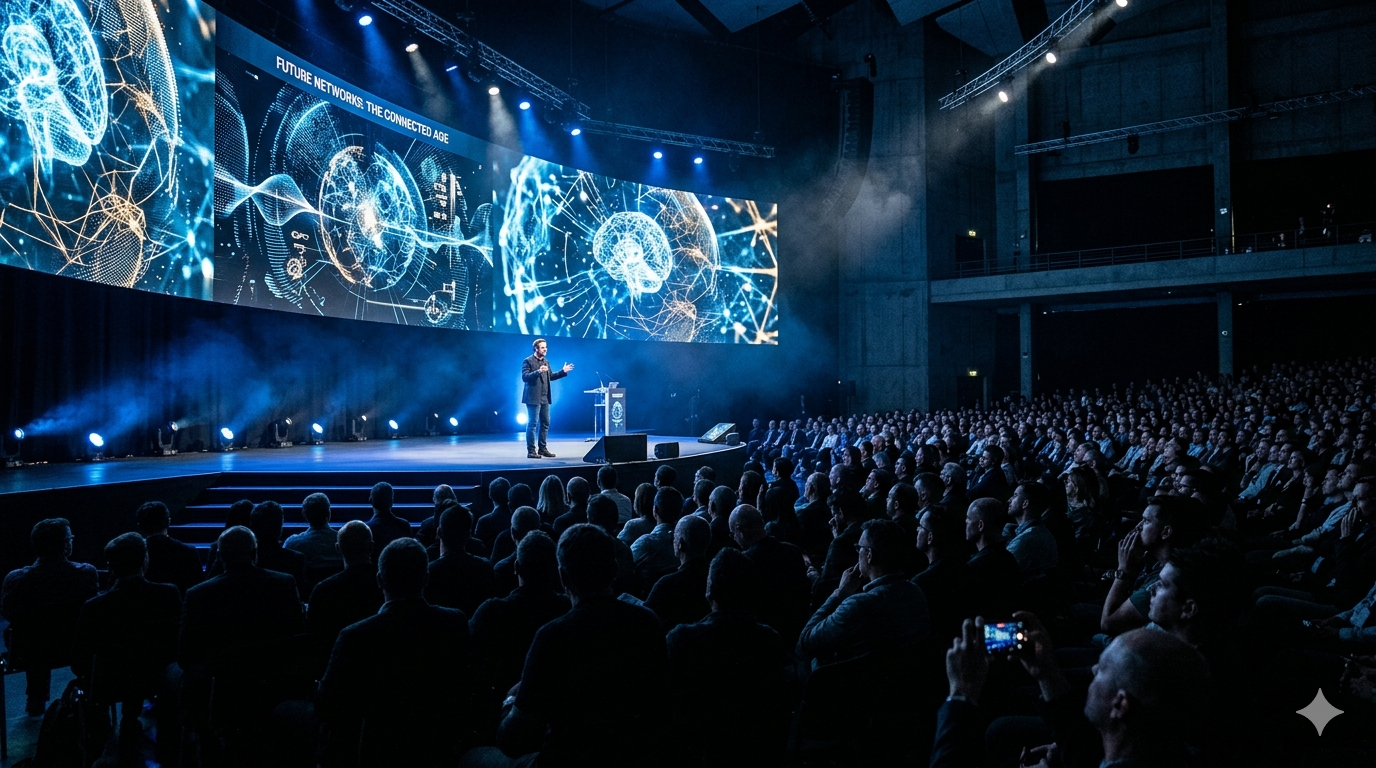
Google’s core message at Next 2026 is unmistakable: AI is the product now. And what they are trying to provide is scaffolding and governance
I came here wanting to go deeper on GCP services — understanding the infrastructure my teams are building on. I’ve gotten some of that, but the conference has made clear that’s not where Google’s energy is. The whole thing is oriented around AI. That’s not a criticism. It’s where the market is, and Google is not going to pretend otherwise.
The Keynote
The keynote was interesting, but a bit of a letdown. They didn’t announce a new frontier model. What they did announce was a new TPU that increases training speed with more control and self-service options — building blocks for better models down the road, but nothing that changes what you can do today.
The agent governance and security products they showcased are largely not available in GA. Some are in preview, some are coming soon. It was more of a state of the union than a product launch. And for a keynote, you’d expect polished demos — they delivered those by kicking off steps live and then switching tabs to completed work rather than waiting through it in real time.
There was one genuinely comical moment where they put a countdown timer on screen to show how fast something would run, then took shortcuts in the live demo anyway. The timer was still counting. What was the point of the timer?
The Control Problem
The deeper theme I kept coming back to throughout the day is control — and how much of the conversation around agents is really a conversation about fear.
As we build agents and scale them across organizations, there’s an instinct to lock things down. And I think we’re going to regress. Years of work toward DevOps culture, self-service, and distributed ownership — I can see that unwinding as people reach for command-and-control instincts when they don’t fully understand what the agent is doing.
The right answer is guardrails, not gates. But getting there requires both understanding and scaffolding that most organizations don’t have yet.
The Humans in the Room
What struck me most across multiple sessions was how low the baseline awareness is — even among the practitioners in the room.
In one session, someone asked: “How are you controlling what the agent can see or provide information about?” The speaker had already explained they were using fine-grained IAM permissions, and repeated it. The person pushed back — they understood the agent’s IAM role, but wanted to know how it determined what information to share with which users.
They were still thinking about the agent as a piece of code with permissions scoped to the caller. I’ve been thinking about it differently: agents are more like people. People without filters.
Unless you explicitly tell an agent to scope its answers to a user’s group memberships, it will surface anything it has access to, to anyone who asks. It doesn’t have the social awareness to realize it shouldn’t tell someone they’re being laid off in 12 hours. That knowledge has to be built in, deliberately, every time.
The technology revolution here is going to take more time than the announcements suggest. We’re going to need to build out the guardrails and live through some Sev1 incidents across the industry before this gets well-adopted at scale.
The session I had highest hopes for was the GAP CTO’s talk. I came away a little flat — he focused more on strategic “flywheels” in fairly generic terms than on the actual technology decisions. But he said one thing that stuck: applicants have almost certainly used ChatGPT to build their resumes, so they’re already doing it. True enough. But do they know what they’re handing over? We’ve had years of Google and others data-mining our behavior, but that was humans and ML at a distance. This is something categorically different. AI is so much better at understanding and modeling people than we ever were.
What to Expect on Day 2
The second keynote might redeem things. In a lot of ways Day 1 felt like the first act of a movie — slow because it’s laying out why solutions are needed. Day 2 should be where those solutions show up: what Google is actually shipping, and how it helps enterprises move from experimentation to production.
That’s what I’m showing up for.